

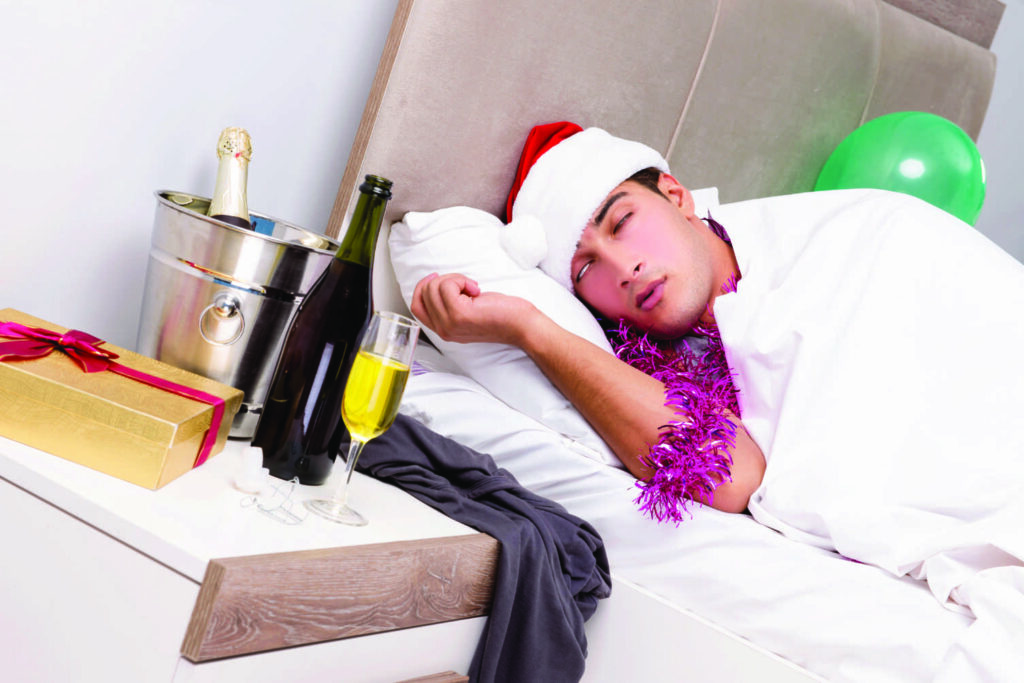
Alcohol’s Impact On Sleep During The Holidays
The holidays bring celebrations, family time, and often more drinking. While alcohol adds to the fun, it can seriously impact your sleep.
Read on to discover how alcohol affects sleep, why it matters, and some tips to help you enjoy the season without losing quality rest.
The Connection between Alcohol and Sleep
We all know that alcohol affects the body in many ways, but its impact on sleep is often overlooked. A glass of wine or beer might make you feel relaxed and sleepy, but alcohol disrupts your natural sleep cycle. Here’s how:
- Initial Sedation – Alcohol is a depressant, which means it can slow down the brain and central nervous system, helping you feel relaxed and possibly even sleepy. This is why people often think a drink or two before bed helps them fall asleep faster. However, this effect doesn’t last.
- Disrupted Sleep Stages – Sleep happens in different stages, including light sleep, deep sleep, and REM (Rapid Eye Movement) sleep. REM is a crucial phase for dreaming and memory processing, and deep sleep is essential for physical restoration. Alcohol disrupts both deep sleep and REM sleep, leading to lighter, less restorative sleep throughout the night. This is why people often wake up feeling tired and groggy after a night of drinking.
- Increased Wakefulness – Consuming alcohol can disrupt your sleep patterns, leading to more frequent waking up throughout the night and preventing you from getting quality rest. As your body breaks down the alcohol, it creates substances that disrupt your brain's regular operations, leading to more frequent waking and diminished sleep quality.
Alcohol and Sleep Quality
Poor sleep doesn’t just impact mood and focus—it can also harm physical health over time. Regular lack of sleep weakens the immune system, raises blood pressure, and increases the risk of mental health issues such as depression and anxiety.
Given that the holiday season often leads to multiple nights of disrupted sleep, the effects of alcohol on sleep should not be underestimated.
Alcohol and Common Sleep Disruptors
Other holiday-related factors, such as irregular schedules, late nights, and the consumption of heavy meals can worsen the effects of alcohol on sleep. Here are a few ways alcohol combined with other common holiday habits can disrupt sleep:
- Late-Night Eating – Festive meals and snacks, especially those eaten late, can make it harder to fall asleep. Combined with alcohol, which stimulates the stomach and can cause acid reflux, this can make the sleep environment uncomfortable.
- Irregular Sleep Schedule – The holidays can disrupt your usual sleep schedule, especially with late-night gatherings and travel. When combined with alcohol, it becomes even harder for the body to get back into a regular sleep routine.
- Increased Stress – For many people, the holiday season can be stressful, and alcohol is often used to unwind. Unfortunately, this can become a vicious cycle, as alcohol initially seems to relieve stress but ultimately worsens it by disrupting sleep, leading to higher anxiety and irritability.
Poor Sleep Affects Holiday Health
During the holidays, poor sleep can make it challenging to keep up with social obligations, maintain a positive mood, and stay physically healthy. Lack of quality sleep due to alcohol can lead to:
- Low Energy and Mood – Poor sleep makes you more likely to feel irritable, tired, and less motivated. This can dampen your holiday experience and make social events feel more exhausting.
- Weakened Immune System – Good sleep is essential for a strong immune system. If you’re sleep-deprived, your body is more susceptible to colds, flu, and other illnesses, which are more common in large gatherings.
- Increased Risk of Accidents – Drowsiness combined with even small amounts of alcohol can increase the risk of accidents, whether you’re driving or simply going about daily activities.
Managing Alcohol’s Impact on Sleep
The good news is that you don’t have to give up alcohol entirely to enjoy better sleep during the holidays. Here are some practical tips for reducing alcohol’s impact on your rest:
- Limit Drinking Close to Bedtime – Avoid drinking alcohol at least three hours before going to sleep. This allows your body more time to metabolise the alcohol, reducing its effects on your sleep cycle.
- Stay Hydrated – Alcohol is dehydrating, which can disrupt sleep and leave you feeling worse in the morning. For every alcoholic drink, have a glass of water to stay hydrated and reduce the chance of waking up with a headache.
- Pace Yourself – Limit the number of drinks you have in one sitting. A good rule of thumb is to stick to one drink per hour, allowing your body time to process the alcohol. This can prevent a high blood alcohol level that would otherwise impact your sleep later.
- Alternate with Non-Alcoholic Drinks – Consider alternating alcoholic drinks with non-alcoholic options, like sparkling water or festive mocktails. This helps pace your drinking and minimises the overall alcohol intake for the evening.
- Keep a Consistent Sleep Routine – Even during the holidays, try to maintain a regular sleep schedule by going to bed and waking up at the same time each day. This consistency helps your body’s natural sleep rhythm, making it easier to get restful sleep.
- Consider Cutting Back – If alcohol disrupts your sleep, try limiting how much you drink during the holidays. You can still enjoy the celebrations without drinking too much.
Conclusion
While alcohol may be part of the holiday season, it’s essential to understand how it impacts your sleep and overall health. Disrupted sleep can leave you feeling drained and affect your enjoyment of holiday celebrations. Being mindful of how much and when you drink can help you enjoy the festive spirit without sacrificing good rest.
The holiday season often means more social events, celebrations, and, for many, increased alcohol consumption. However, it’s important to be aware of how alcohol affects your sleep during this festive time. At Medical Society, we’re dedicated to helping you live a healthier, more energised life. Our personalised health advice is tailored to your lifestyle needs to ensure your body gets what it needs to stay strong, well-rested, and ready to thrive.

