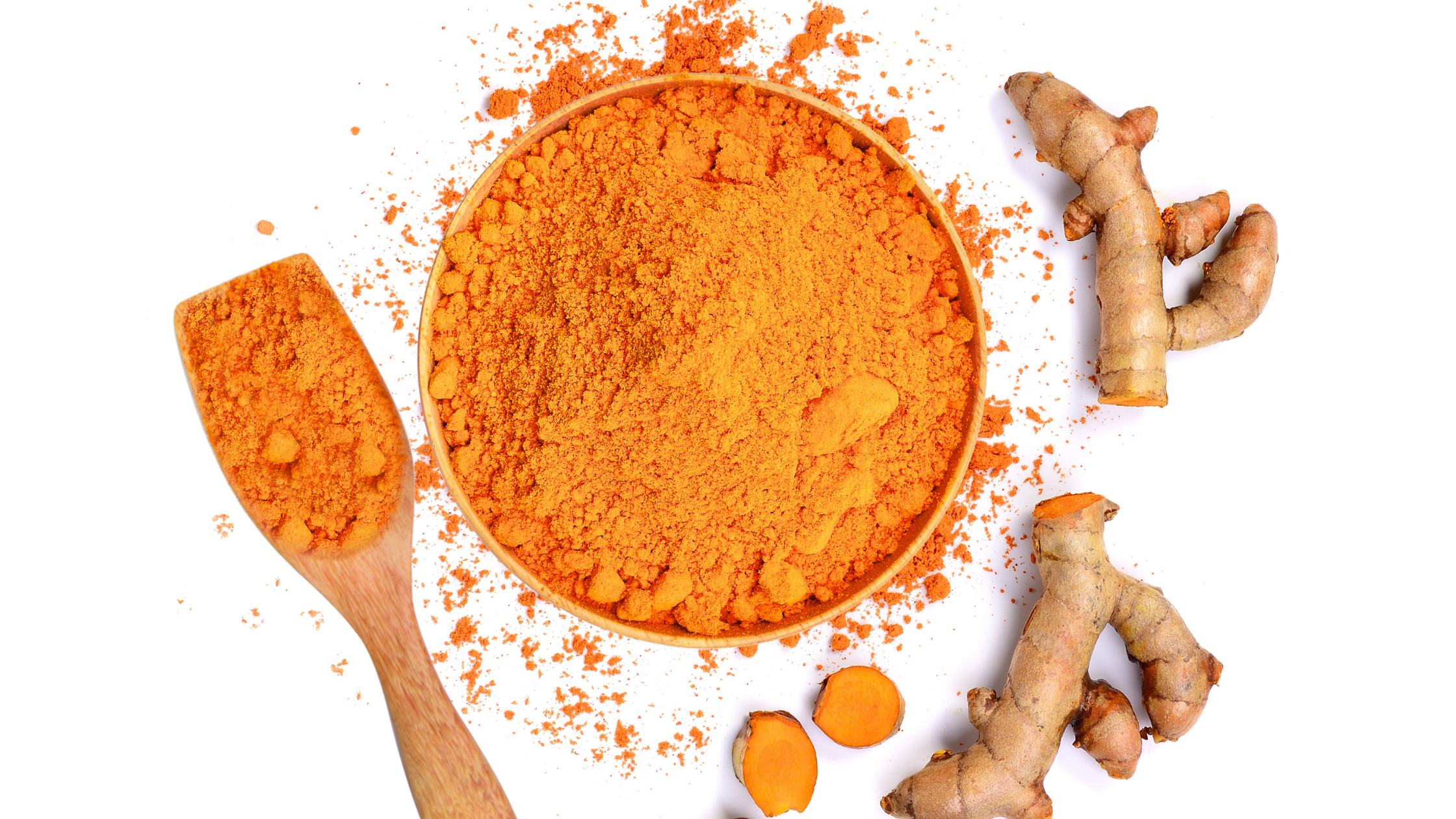
For some people, turmeric is just a colourful, flavourful addition to different curried meals. However, the bright yellow spice has been used for centuries for its health benefits.
It’s an anti-inflammatory, a blood tonic, and an emmenagogue (which means that it stimulates blood flow), and a carminative (yes, it relieves gas). It also promotes ovulation in women, is excellent for the skin, and is antibacterial, antifungal, and antimicrobial. Turmeric is also a blood thinner and a blood detoxifier. And it’s a pain-killer.
It has been known to speed up the healing of wounds and is primarily grown for its root. Besides for cooking, ancient history has shown it to be helpful in fabric dyeing, cosmetics and traditional medicine in China and India.
Curcumin is a pigment found in turmeric. The pigment is what makes turmeric bright in colour and contributes to its range of health benefits – specifically antibacterial, antimicrobial, anti-inflammatory and antioxidant effects. It may help prevent specific types of cancer and can ease the effects of psoriasis and arthritis.
Natural anti-inflammatory
Inflammation is necessary for your body. It fights and repairs damage from bacteria, viruses and injuries. However, long-term inflammation is found in most chronic conditions, such as heart disease and cancer.
Curcumin in turmeric has strong anti-inflammatory properties. Curcumin has positive effects on people with rheumatoid arthritis, inflammatory bowel disease and more.
Strong antioxidant
Oxygen-free radicals are chemically active molecules that damage your body’s cells. Curcumin forcefully minimises this – decreasing free radical damage and inflammation, which provokes cardiovascular disease. It helps to prevent and manage heart disease.
Research shows that turmeric lowers cholesterol and triglycerides in people who could get heart disease. It can also improve your blood pressure.
Antioxidants may decrease your chance of cataracts, glaucoma and macular degeneration.
Anti-cancer effects
Human and animal studies discovered that turmeric could affect cancer formation, growth and development at a molecular level. you can reduce the spread of cancer. Turmeric plays a big role in killing various cancerous cells in the body. It can assist with easing the adverse side effects of chemotherapy.
Kripalu adds; the qualities of turmeric, in Ayurvedic terms, are hot, light, and dry. Turmeric has a bitter taste. Turmeric can also assist in recovery from chemotherapy.
Brain food
Evidence suggests that curcumin may help protect against Alzheimer’s disease. It reduces inflammation, as well as the build-up of protein plaques in the brain – a trait of Alzheimer’s disease patients.
Some evidence shows that turmeric helps depression and mood disorders. Turmeric is impactful as a supplement too.
You can prepare fresh turmeric by removing the skin with a vegetable peeler or knife. Once its actual earthy insides are uncovered, you can finely slice or grate it. Being bright in colour, turmeric is a natural dye. It can stain surfaces and your hands.
One inch of the fresh root is equivalent to a tablespoon of grated turmeric, and therefore one teaspoon of ground turmeric.
It has become a trendy ingredient to use in food and drinks. It may seem tricky to add to your diet, but food lovers have found suitable matches. Apparently, the benefits of turmeric magnify when combined with pepper! Who would have known?
Cooked eggs
Whether fresh or in spice form, add it to your scrambled eggs, omelettes and frittatas. You may also enjoy finely grated and whisked eggs for a pastry wash. The pastry will come out as a beautiful golden yellow colour.
Golden turmeric milk
Golden milk is essentially a turmeric latte made with warm milk, slowly heated with turmeric and other spices. Usually, the milk is dairy-free and warmed on a stovetop – the traditional way. You are welcome to add water from the kettle to the spices with a bit of coconut milk.
Turmeric salad dressing
If you love to make your own salad dressing, then this is the ingredient for you. Bottled salad dressings are full of processed sugar. There’s something about making a homemade salad dressing that tastes so much better.
In a jar, you can add olive oil, apple cider vinegar, salt, pepper and turmeric. Dijon mustard or lemon juice is optional. A splash of maple syrup or liquid stevia can sweeten up your salad.
Margarita
Adding spices to your margarita or any cocktail is great for the flavour. A margarita with tequila, fresh lime, Combier or Cointreau and turmeric is a healthy and satisfying combination.
Easy to find and store!
In all forms, it can be found at your nearest spice shop, local grocery store or at the pharmacy in the supplement section. Keep it in your fridge for weeks, and when frozen, it lasts for up to six months.
The best way to reap the long-term benefits is to consume it every day, whether in food or beverages. Speak to a medical professional if you feel uncertain.
Please consult a medical professional before starting any new eating plan or adding anything new to your diet.
The Medical Society is passionate about ensuring that the community has all the information and care to meet their nutritional needs.