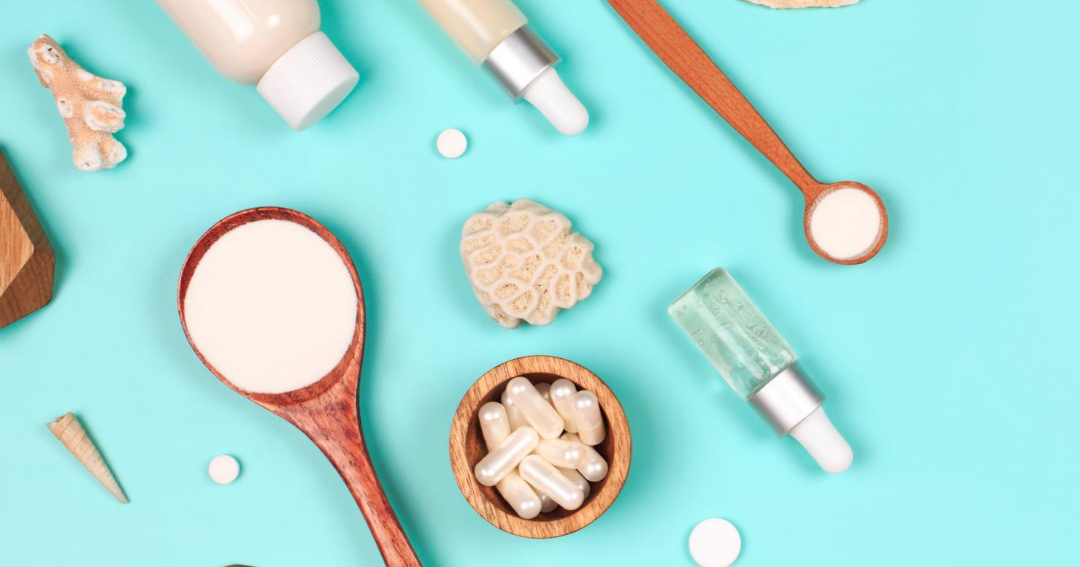
The latest health craze on the market is collagen. People are not just injecting it into their bodies for cosmetic purposes anymore. People are drinking collagen in their smoothies, applying it topically and even sprinkling it over their food.
There are many types of collagen. The collagen superfamily contains over 20 different collagen types, which serve a structural function in the body. However, the human body consists of types 1, 2 and 3. This is why people supplement it in several ways. The benefits of collagen are well documented and bountiful. Nowadays, it has become a sort of craze, particularly on social media, with influencers using various brands of collagen powder for anything from weight loss to hair growth.
What are these magical health benefits that come from this product? Is it another Instagram fad, or are we onto something? How much extra collagen should we be consuming?
What is collagen?
Collagen is a protein. It is found in the body naturally and nourishes the skin, hair and nails. It is the protein responsible for making all those parts shiny and ‘full’ looking. It also is what gives the skin and hair elasticity. Without collagen, many structures of the body will be brittle.
Collagen has been popular in the beauty industry for years. It is a common additive in shampoos, face creams and lotions. Many lipsticks and nutritional supplements promise great skin and other aesthetics amid the plumping properties of collagen. Collagen strengthens your bones, tendons and ligaments. Collagen supplements are newer, and women, in particular, have started taking extra collagen in pill form, or in some cases as a powder that can be added to food and beverages. It is mostly tasteless and mixes well into these meals.
When consumed, many people report feeling less hungry. Collagen has made a name for itself in the dieting and weight loss community as a healthy appetite suppressant. Collagen is rich in the amino acids, proline and lysine.
What are good, natural sources of collagen?
Collagen is found in many foods, particularly animal products. A popular source of collagen is bone broth. Dieters love bone broth as a low calorie, nutritious soup. “Diet plays a surprisingly large role in the appearance and youthfulness of your skin,” certified holistic nutritionist (CHN) Krista Goncalves told Healthline. “And that all comes down to collagen.”
She continues that most over-the-counter supplements haven’t been FDA approved. This means that their benefits are questionable because they aren’t regulated.
The best way to consume extra collagen is through your eating plan.
Fish
Other foods that are high in collagen are fish, poultry and shellfish. The bones, ligaments and other cartilage bits in these animals are rich in collagen and other nutrients. The parts of the fish that are high in collagen are usually the parts that get discarded, though. To benefit fully from the collagen stores, boil the fish and serve as a broth or curried and cooked in its own juices.
Egg whites also have high volumes of proline. Proline is an amino acid that greatly aids the body’s collagen production.
Garlic
Even though you may need to eat gargantuan amounts of garlic, it is a source of collagen and very easy to incorporate into food. If you can stomach the pungent flavour, you can eat it raw for maximum benefits. Many people use garlic to make tea. It releases all of its nutrients when steeped in boiled water. Garlic is high in sulphur, which is a trace mineral that helps synthesise and prevent the breakdown of the body’s existing collagen.
Fruits and greens
Many fruits, particularly citrus fruits, are great sources for the building blocks of collagen production. Leafy greens such as spinach, kale, Swiss chard, and other salad greens get their colour from chlorophyll, known for its antioxidant properties. Eating foods that are rich in chlorophyll has proven to increase the precursor to collagen in the skin. It is important to note that fruits do not directly contain collagen, but have protein and vitamins, which help with the body’s collagen production and absorption.
Vitamin C
Eating fruits like strawberries, bell peppers and berries are a great source of vitamin C. Vitamin C aids the formation of collagen. One cup of lemon juice contains 128 percent of the daily value of vitamin C while 250 grams of strawberries pack more than 150 percent of the daily value for vitamin C.
According to Healthfully, one cup of strawberries packs more than 150 percent of the daily value for vitamin C. Vitamin C functions in the cross-linking of collagen, which increases its tensile strength.
So what are the benefits?
- Collagen improves the health of the skin, teeth and nails.
- It assists in strengthening the bones and lubricating the joints.
- Collagen helps keep tendons, ligaments and joints flexible by aiding elasticity.
- Collagen increases muscle mass and prevents bone loss.
Heart Health
A lesser-known benefit of collagen is that it keeps the heart muscle strong. According to Medical News Today, a small study of 30 participants gave 15 people in the group a dosage of 16g of collagen tripeptide for six months. This group saw a significant reduction in artery stiffness and a reduction in their low-density lipoprotein, or “bad,” cholesterol levels.
Reducing the stiffness of arteries can help promote heart health. However, more research is necessary to prove the effects of collagen in supporting heart health.
The Medial Society is passionate about nutrition. Before taking any supplements, consult your doctor, nurse or healthcare practitioner so that you have proper, informed guidance.
TMS is particularly concerned with the nutrition and growth of children; whose developing bodies will benefit immensely from eating a diet rich in collagen and other vitamins and minerals.
The Medical Society offers assistance in many facets of a child’s health and development such as child nutrition and growth monitoring; which is the constant checking of the weight and height of your child by age range. This includes comparisons with developmental milestones against age.
We are on hand for advice on child nutrition, including breastfeeding, services that are available at all Medical Society facilities.