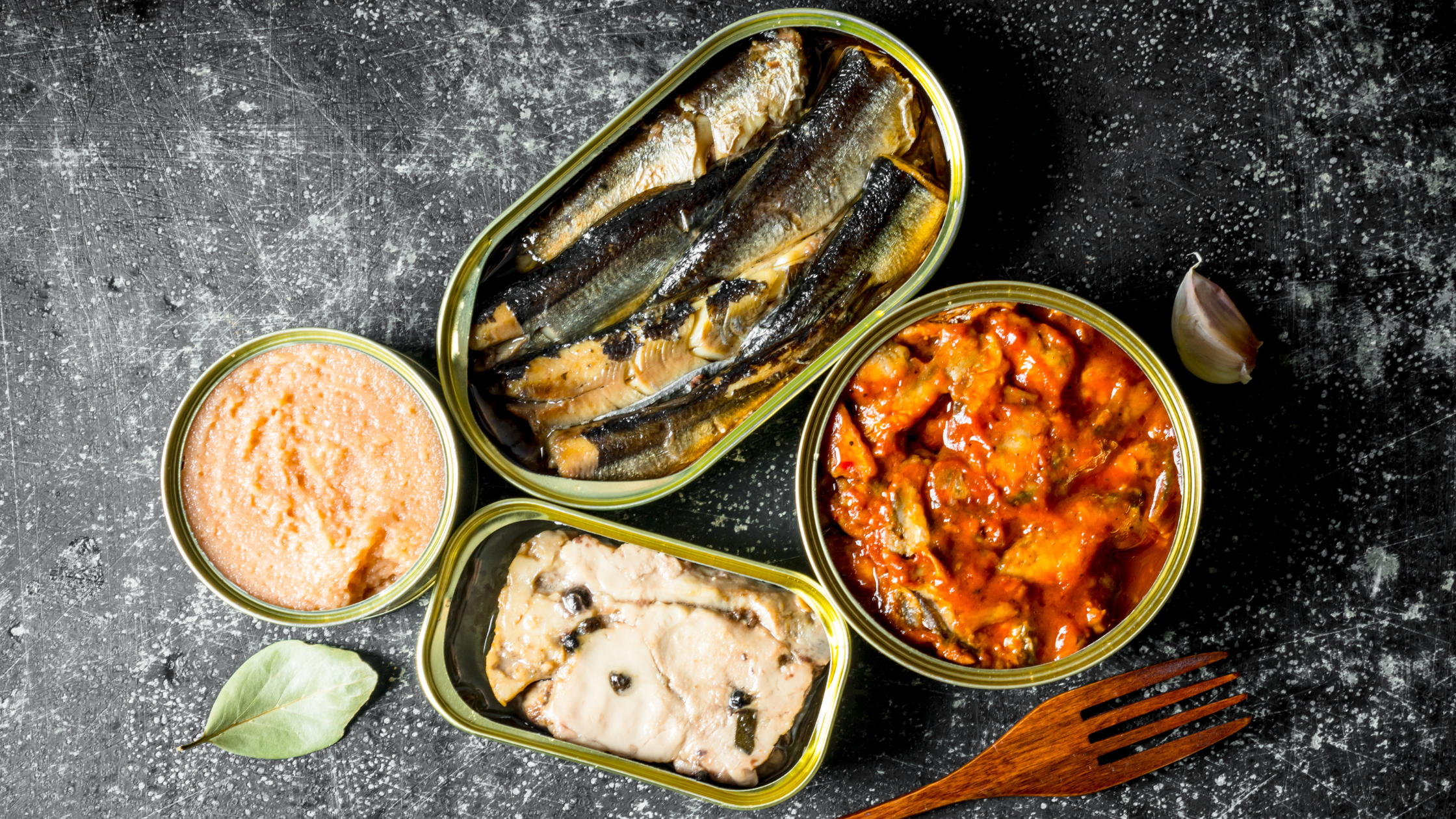
Tinned food is quite popular and lasts forever! Essentially (if we listen to all the health buffs and doctors about what the body needs), we should all be eating a variety of fresh, preferably organic fruits and veg, filling about three quarters of your plate or bowl. And they should mirror the seven colours of the rainbow – red, orange, yellow, green, blue, indigo and violet – for you to get you all your necessary vitamins and minerals a day.
Unfortunately, the majority of people in the world don’t have the time or money to eat fresh, clean and healthy. After a busy day at work, they are most likely going to buy fast food, pre-packaged supermarket meals or reach for a tin of something off the cupboard shelf to whip up into a curry or chilli bean stew with left-over meat from the previous night’s meal.
Convenience is a big factor in the food choices we all make.
What’s good about tinned foods?
So, highly processed foods are usually low in fibre and exclude fresh fruit and vegetables. But, if tinned food is all that you are able to access, it can be part of a good diet, especially if you select from a variety of the healthier options; tinned peaches, stews, veggies etc. After all, it is better to have some fruit, veg and fibre than none at all, even if it lacks all the nutrients contained in fresh produce.
According to Heal with Food, the pros of eating from tins are:
- When on restricted budget, buying tinned food is a cheaper addition to bulkier foods like rice and potatoes – just to eat a filling meal.
- Buying tinned foods are convenient when you don’t have the time to chop vegetables after work. Tinned beans or vegetables bulk up veg soups, stews or bean salads.
- Unopened tinned food has a long shelf-life until the expiration date on the tin. From the manufactured date, the food retains its quality up to 2-5 years.
- The nutritional aspects of commercially tinned vegetables and fruits aren’t too bad because they are processed within hours of harvesting, which is the peak nutritional value period of fresh produce. As it is with frozen fruits and veg, the manufacturing processes lock in some of the nutrients.
What’s bad about eating from tins?
Experts urge people to ditch all damaged tins because a damaged or pierced tin allows bacteria to grow inside the food. Also, if you open the can and the food smells off, discard it immediately.
Food from a damaged tin might be poison. You are likely to end up with: vomiting and nausea, bloody diarrhoea; abdominal pain and cramping; and fever. Although the poison will run its course, you run the double risk of the equally dangerous dehydration.
At worst, you may contract foodborne botulism from damaged tinned food. According to the Centers for Disease Control and Prevention, botulism is caused by a nerve toxin released by some bacteria. These attack the body’s nerves resulting in muscle paralysis, breathing difficulties and then death.
Botulism
A serious, deadly condition caused by toxins from bacteria called Clostridium botulinum, botulism is a very rare occurrence.
The most common forms are:
- Infant botulism. This is the most common form, and it typically occurs in babies between the ages of 2 months and eight months. This type of botulism begins after Clostridium botulinum bacterial spores grow in a baby’s intestinal tract.
- Foodborne botulism. The harmful bacteria thrive and produce toxins in environments with little oxygen, such as in home-canned food.
- Wound botulism. If these bacteria get into an open wound on the body, they can cause a dangerous infection that produces the toxin.
All types of botulism are medical emergencies.
Viruses
Besides food poisoning, it is also possible to get viruses or parasites from contaminated food too. And to get breathing problems like asthma from the preservatives such as sulphates.
While studies show that Bisphenol A (BPA), a chemical found in tin cans, is highly toxic, even in small quantities, the studies link exposure to BPA to many diseases such as heart disease, obesity, diabetes, breast cancer, prostate cancer, neurological disorders and infertility.
Livestrong warns of the many disadvantages of eating from tins.
These are:
- High in sodium: salt preserves the food and elevates blood pressure, water retention and increases calcium loss. Even though salt is not listed on a label, sodium will appear in other additives such as monosodium glutamate, sodium citrate and onion salt.
- High in sugar: most fruit is canned in syrup that makes it ideal for serving as desserts. This increases the calorie count and carbohydrate levels. If there are no other means of getting fruit, they advise choosing fruit canned in water or their own juice.
- Fewer nutrients; there are less nutrients in canned fruit. We peel and cook the fruit and lose Vitamin C. Vitamin A, potassium, the carotenoid lycopene survives the process.
The bottom line is; tin doesn’t taste as good as fresh produce, which retains much of the nutritional and fibre benefits of the whole food. But, using proper care and inspection methods, can form part of a healthy diet.