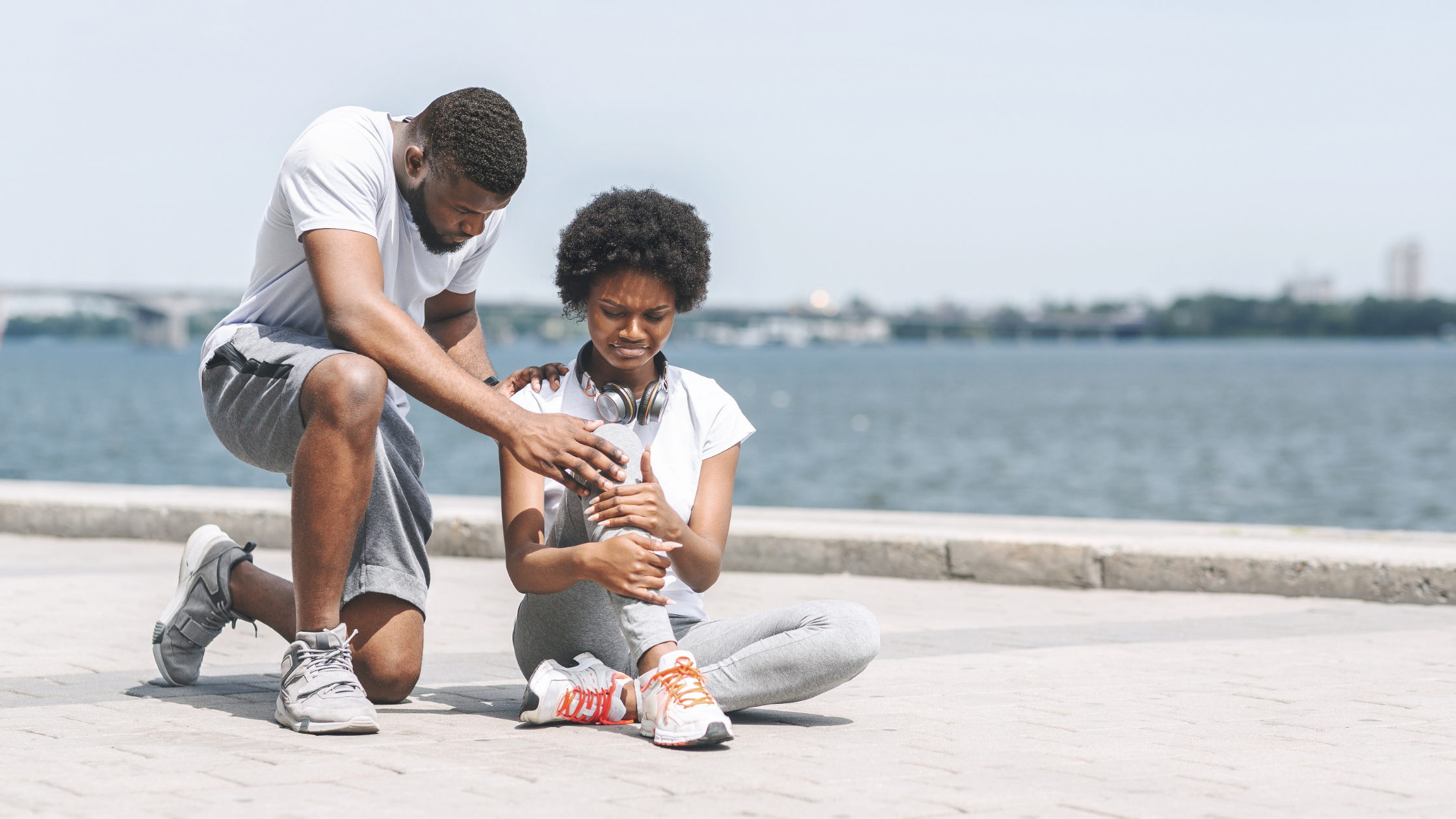
A sprain can happen suddenly, usually when you twist or roll a limb awkwardly, or over-stressing limbs during sport or work activities.
The most common sprains are ankle, wrist and knee injuries -all with similar signs and symptoms.
These are:
- Weakness and inability to bear weight on the ankle, wrist or knee, for example
- Bruising and swelling
- Tender to the touch and muscle spasms
- Instability or buckling under pressure
- Popping sensation or sound when the injury occurs
- Restricted motion.
The causes are similar too, with injuries mostly occurring when you lead an under-active life, have poor strength and flexibility, and you suddenly decide to be active. For example, let’s say you suddenly decide to go hiking. And on that hike, you wear flip-flops instead of properly fitting shoes. The uneven walking surface is likely to increase the risk of injury.
Participation in a sport that requires running or jumping, rolling, twisting or cutting action could end up in a sports injury.
Fixing the damage
Self-care is possible once you have ruled out a fracture or a torn ligament injury, and the damage is limited to swelling and tenderness.
According to the Mayo Clinic, if the damage is extensive, you need x-rays and even an M.R.I. (magnetic resonance imagining) to determine what treatment is necessary.
Usually, healing takes anything from a week to a few months. The longer the time for healing, the greater the chances that an operation will be required to fix the damage to the ligaments.
When you have a sprain, the ligaments – bands of tissue that hold the bones together tear or are stretched beyond their movement parameters.
If you aren’t recommended to a physiotherapist to strengthen and mobilise the affected limb or joint, you can take care of yourself with R.I.C.E., which stands for rest, ice, compression and elevation.
This is what you do:
- Rest: At first, avoid moving too much or putting pressure on your injured limb or joint. Movements would cause more pain, swelling and discomfort. Move around slowly and gently and gradually increase your level of physical activity.
- Ice: Immediately place an ice pack on the injury or dunk your injured limb in a bucket or bath of ice. Do this for up to 20 minutes every two to three hours during the daytime.
- Compression: Apply a compress on the swollen area but not too tightly as you don’t want to cut off circulation or cause further pain, numbness or swelling. When you apply your bandage, start wrapping from the point closest to your feet and furthest from your heart.
- Elevation: Place your ankle on a cushion that is higher than your heart, especially when preparing for sleep. This helps with the reduction of swelling.
Failure to care for a sprain immediately after being injured or after repeated sprains could result in a lifetime of chronic pains, chronic instability and chronic arthritis in the affected joints.
Ankle Injuries
If you’ve twisted your ankle once, it is more than likely to happen again. An ankle brace or taping a previously injured ankle and activity appropriate shoes would be an excellent place to start. Take extra care with walking and running on an uneven surface.
Always do warm-up exercises before playing a sport. Do muscle strengthening and flexibility, core stability and balancing training in your sets.
When in doubt about tackling a new physical activity for which you haven’t trained, then instead leave it out. And for women who are prone to twisting their ankles, ditch very high heels.
Knee Injuries
Spraining your knee is another level of pain and immobility, and it often leads to surgery on one of the four main ligaments in the knee joint that connects the thigh bone to the shin bone.
The severity of the injury – an overstretched ligament, a partially torn, or a severely torn or separated ligament affects healing time, ranging from two weeks to a month without surgery and up to 6 months with surgery.
You can only begin to do sport again once you are fully healed as problems can occur later, says Healthline.
Once you are further along in your recovery, your doctor may recommend that you do sets of exercises that include: leg lifts, thigh strengthening, bending your knees, raising on your toes, thigh and calf stretches, weight training on a hamstring curl and leg press equipment.
Wrist Injuries
Wrist injuries are common to any field of play because losing balance means putting a hand out to break your fall. These injuries usually heal independently and require immobilisation for 48 hours and ice treatment. Mild sprains heal within two weeks, and moderate sprains take up to eight weeks.
However, healing takes six months to a year when surgery is needed. The experts recommend that you wear a wrist guard that will prevent your joints from twisting too far out of bounds once you return to your sport.
The Medical Society is passionate about proper health and nutrition for children and adults. The Medical Society covers you and your family for whatever unforeseen illnesses may come your way, offering affordable healthcare for adults.
Starting from R89 a month, members have unlimited nurse-room visits, as well as dietary advice from professionals.